Learn by Doing Activity #004 How Much Money Does This Family Need This Month? Money & Budgeting

How Much Money Does This Family Need This Month?

A family wants to know how much money they need for the month. Some expenses happen weekly, some happen biweekly, and some happen monthly. Convert each expense to a monthly amount, add the total by hand, test a change, and compare your work.

30-45 min Beginner

Check your work: IversusE Budget Planner

Family sorting weekly, biweekly, and monthly expense cards while asking how much money they need this month.
Start by predicting before adding the expenses.

Learn by Doing

Predict Gather Information Calculate Test Compare Reflect
Real-World Challenge

Set up

Materials

Use a simple set of expense cards and a clean place to show the monthly conversions.

Materials Required

Required

  • Paper
  • Pencil
  • Calculator

Suggested materials

  • Printed expense cards
  • Budget worksheet
  • Monthly calendar
1

Predict

Make a first estimate.

Before adding anything, decide whether the family will need more or less than a target amount.

Prediction question

Do you think this family needs more or less than $2,500 this month?

  • What expenses do you expect to be largest?
  • Which expenses happen most often?
  • What makes your prediction feel reasonable?
2

Gather Information

Sort the expense cards by frequency.

Read each expense and identify whether it happens weekly, biweekly, or monthly.

Sample expenses

Monthly: rent $1,200, electricity $110, water $45, internet $80, phone $95, car payment $325.

Weekly: groceries $180, gas $60, allowance $20. Biweekly: lawn care $50.
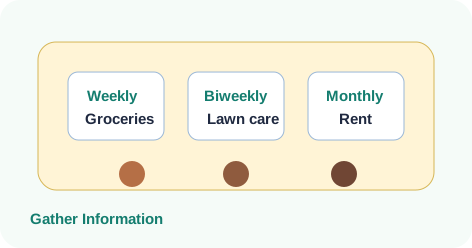
Expense cards labeled Weekly, Biweekly, and Monthly spread across a table while children organize them.
Sorting by frequency helps prevent adding unlike amounts too soon.
3

Calculate by hand

Convert each expense to a monthly amount.

Expenses with different frequencies must be converted before they can be added.

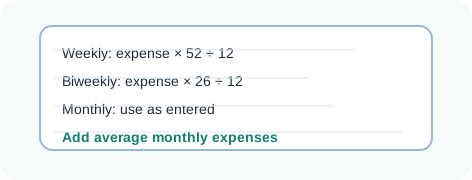
Monthly conversions

Weekly expense × 52 ÷ 12 = average monthly expense

Biweekly expense × 26 ÷ 12 = average monthly expense

Monthly expenses = use as entered.
  • Convert each weekly expense to an average monthly expense.
  • Convert each biweekly expense to an average monthly expense.
  • Copy each monthly expense into the monthly column.
  • Add every monthly amount to find the total.
Handwritten calculations converting weekly and biweekly expenses into monthly totals.
Convert first, then add.
4

Test

Change one or two expenses.

Adjust the budget and observe how the monthly total changes.
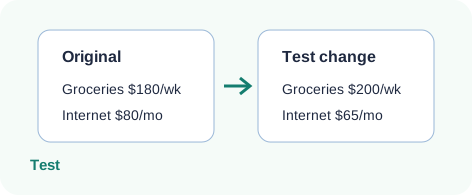
  • What happens if groceries increase from $180 weekly to $200 weekly?
  • What happens if internet decreases from $80 monthly to $65 monthly?
  • What happens if one optional subscription is cancelled?
  • Does a weekly change affect the monthly total more than you expected?
The family changes grocery and internet expenses and recalculates the monthly budget.
Small recurring changes can make a larger monthly difference.
5

Compare

Compare with the IversusE Budget Planner.

Use the app after the hand calculation to check and refine the monthly total.

Check your work

IversusE Budget Planner

Enter the same expenses and frequencies, then use the app result to check and refine your estimate.
Open IversusE
  • Compare your hand estimate and the IversusE result.
  • Check whether each expense frequency was entered correctly.
  • Explain any difference between your estimate and the app total.
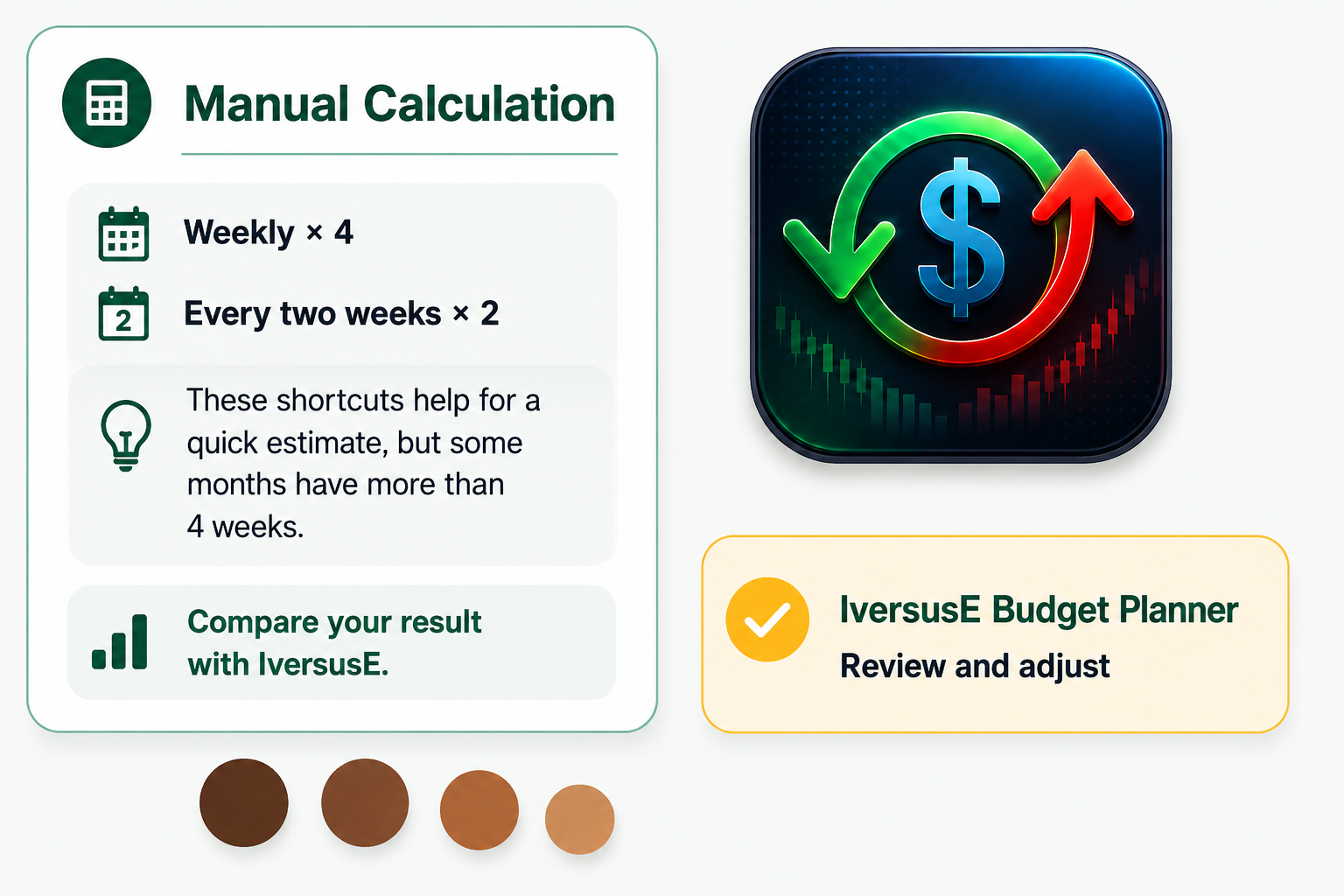
Manual calculation shortcuts compared with the IversusE Budget Planner.
The app checks the work; it does not replace the thinking.
6

Reflect

Think about the family budget.

Budgeting is not just adding numbers. It also helps people notice needs, wants, and patterns.

Reflection questions

  • Which expense surprised you?
  • Which expense occurs most often?
  • Which expense costs the most each month?
  • Which expenses are needs?
  • Which expenses are wants?
7

Apply

Real-World Challenge

Create a simple monthly budget and explain how each expense was converted.

Build a simple monthly budget

Create a budget for a fictional family or, with a parent's permission, use a simplified version of your own household expenses. Convert each frequency before adding the monthly total.
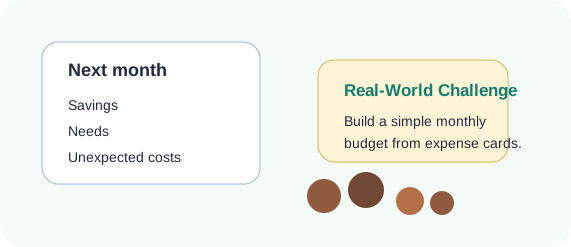
The family discussing how budgeting helps prepare for future expenses and unexpected costs.
Monthly planning helps families prepare for regular bills and surprises.

Activity sheet

Activity Sheet #004: How Much Money Does This Family Need This Month?

Use the companion activity sheet page to plan the recording flow for prediction, expense frequency sorting, monthly conversions, test changes, app comparison, reflection, and Real-World Challenge.